8 DNA Markers of True Leaders

o-VULNERABILITY-facebookGen. 24:1-27; Heb. 12:3-11; John 7:1-13

Today’s Gospel reading deals with some marks of true discipleship.  So in many ways this is an extension of yesterday’s gospel reading Reflection – so here comes round 2: Becoming Disciples Part II – Leaders Edition.  Maybe the whole book of John is a reflection of DNA markers for true leaders.

The Church in the 21st Century faces many challenges.  This is no secret.  And as the Church continues to morph into this postmodern age through the direction of the Holy Spirit, we are discovering that those who are pliable and flexible to the Holy Spirit’s leading are finding more success in ministry.   So upon reading John 7:1-13, and many of the previous John passages our lectionary has thrown at us, I developed a list for leaders.  8 DNA Markers of the True Disciple.

1) Authenticity

The younger generations especially see through BS fast.  The Church demands disciples, who like Jesus, are willing to be honest, authentic in relationships, and build trust.

At the very least this means not sticking our heads in the sand when it comes to climate change, the age of the universe, and the reality of science.  We all know the world is billions of years old, just like we all know babies don’t come from storks.  So it is time to engage our minds as well as our hearts, and authentically come to people with a message that relates and that has power.

This also means keeping it real.  Jesus certainly did.  identity-795295_960_720

For us keeping it real may look a bit different.  We are broken people.  We fall short.  Puffing doesn’t last (…or work! Remember that seeing through the BS part?).  Showing vulnerability can mean trouble in conflicted situations – with unhealthy folks going for the jugular.  But in most situations being authentic means having a certain level of vulnerability.  We are not know-it-alls.  We are not Superman.  We are limited and human.  The more we act like it the better.

2) Humility

Most people gloss over this part of John’s Gospel.  But in 7:7 an amazing aspect of Jesus’ humility is lifted up. “The world cannot hate you, but it hates me because I testify against it that its works are evil.”  So Jesus doesn’t just speak the truth in love, but owns up to the reality: There are some things you can do that I can’t do.  I have already burned my bridge with the powers that be here.  You can take this message further in a way I can’t, he says.

That is something we rarely think about!  Some might think of it as heresy.  To suggest that God is limited in some way – powerless in this situation.  I don’t think that’s what’s going on in this brutal honesty.  He is keeping it real and saying “You all need to step up.”  We will get to that one.

3) Trust

In John’s Gospel Jesus decides not to go to the Festival of Booths.  This seems surprising and disarming, especially given that the Jesus we know from the Synopic gospels confronts the powerful at seemingly every turn.  Here he trusts in God.  There is a right time and a wrong time.  This isn’t the time.  Then he trusts his decisions.  Furthermore, he doesn’t second guess himself, and flint off to the festival after mulling it over.  He trusts things are going to play out in a way that will work for God’s purposes.

Easier said than done, right!?!?!?

4) True leaders know that participation in church activities doesn’t lead to people being engaged, but that engagement drives attendance.

For too long we have tried to put the cart before the horse.  Some have been trying to recreate the 1950s.  Was it really all that great?  This is most evident when we think that if we could just get people to show up at church, then they will become engaged in our community.  This is backward.  Instead, it is engagement that leads to participation in activities.

What’s ironic about this, is that it has always been this way.  This is nothing new.  Engagement has always been first, then participation, even in the “glory days” of the 50s and 60s.  Think about it.  Did people just randomly come to church out of the blpine-needles-1110338_960_720ue?  No.  They came because they were already connected to their neighbors and friends, and someone invited them to church where relationships and faith grew deeper.  They went to church because their friends were there.  Nowadays, people connect on social media, and then develop relationships.  Is that really any different?  If people are engaged, then they will grow in participation.

5) Good leaders don’t count numbers.  (Well, at least they don’t count like others do.)

For a long time the Church was obsessed with MEMBERSHIP.  Then we became obsessed with WORSHIP ATTENDANCE.  Thankfully those days are dying away.  True leaders don’t count.  They focus on the spiritual core of a congregation, equipping them, bringing people to spiritual maturity, and growing from the core.

In John we see a Jesus who is unconcerned with converting the masses.  He is concerned about the truth.  His following was small.  At times they had to function in secret in order to travel in safety.  This is OK.  We need to focus on engagement, and on the Message.

6) Leaders have “Show Yourself to the World” DNA

OMG, it’s an introvert nightmare!  (But don’t give up hope, fellow introverts!)  If we are going to be true disciples, leading others to follow, then we are going to have to be known.  No one follows by osmosis or magic.  They need to hear it, see it – from someone.

In our digital world, guess how that is going to happen most effectively?  Online is a good start, especially for those 35 and under.  This is where many find connections, finding new friends and developing existing relationships.  This might be the salvation for introverts.  We don’t need to stand out on soap boxes shouting at the wind for the message to be heard.  In the 21st Century, the ability to “show yourself to the world” as Jesus calls us to in John 7, is as varied as the brands of toothpaste in the toothpaste aisle.

Showing ourselves to the world can be personalized, customized, and can grow and change too.  Experiment with new behaviors.  Try something new in terms of how you relate to the world.  Maybe it means stopping reading this blog right now, looking up from your mobile device and engaging in a bold new way.  Or maybe it means venturing into a new social media, a new group, or a new place.

Jesus transcended boundaries.  We best do the same.

7) Leaders Dare to Share

shield-123080_960_720OMG, second introvert nightmare!  In our pastor’s world, complete with Healthy Boundary workshops, Safe Sanctuary policies for our children, digital media releases for our youth, and plenty of horror stories about clergy killers, over-sharing on Facebook, or self-absorbed prosperity gospel folk, we have become a generation of clergy that is afraid to share.

The reality is that our people are increasingly isolated, lonely, and hungry for human connection.  What better opportunity to do that than share on digital media or in the pulpit in a safe yet vulnerable way.  Give people an opportunity to get to know you.  Dare to share that embarrassing story, or a joy or sorrow.  Trust me, the world will not come to an end.  You might even find your ministry deepen.

In other words STEP OUT AND STEP UP!

The days of hiding in a hole are over.  No more hiding behind the pulpit, sitting in your office, or thinking that a pastoral visit to the hospital means talking to just one person, and one person only – that person in the hospital bed.

God calls us to step out.

8) Pliability

You know the Ninth Beatitude, right?  Blessed are the flexible, for they will not be broken.

Becoming a True Disciple

AM [Psalm 70], 71; PM Psalm 74
Gen. 23:1-20; Heb. 11:32-12:2; John 6:60-71

Becoming a True Disciple

I have prayed at the Church of All Nations in Jerusalem, which is built over the large exposed stone in the Garden of Gethsemane, thought to be the place where Jesus prayed in agony before he was arrested.  It is always a touching moment – a highlight of the trip – not because of the amazing church, beautiful ceiling and beautiful acoustics – but because it is one of those sites that ties into authenticity.  Praying at that stone, most probably where Jesus himself prayed to the Father, is a place where I get a glimpse of the desolation and despair our Savior felt, abandoned at his most desperate hour.

He wasn’t abandoned by God, but by his friends.  Many of Jesus’ friends are unable to take it.  Some turn away.  Another one betrays him.  The twelve disciples have rifts in allegiance.

Have you ever felt alone? Disappointed by a friend?  Let down? Left in the dark?

Later in the story, ironically, it is lowly Peter who is able to help soothe the troubled waters. Peter, the master of abandon, becomes a leader and someone who represents the brokenness of the human condition, but also the fortitude of the common person.

In Acts, we see Peter grow into these words that were spoken to him, “You have the words of eternal life.”  The miraculous healings the disciples are able to do begin to shine forth in Peter.  The paralytic Aeneas is healed.  And the disciple Tabitha is raised from the dead.

What I love about this story is that it is multi-layered.  First, is that it takes place in Lydda and Joppa, towns west of Jerusalem, a clear signal that God’s good news is spilling out, not just to the north, but in all directions.  The secret is out!

Second, I love that gender roles are fading away.  These stories parallel the raising of Lazarus and the healing of the paralytic.  But now it isn’t Jesus’ best friend Lazarus, it is a woman, and she is referred to as a disciple.  It is the same Greek word that is used for the twelve disciples.  The writer is making it clear that Tabitha and Peter were on equal footing.  The gospel is spilling over into all sorts of places, and God’s wondrous signs are being shown through a woman.  But, it doesn’t end there.

Third, I love this story because it is crazy Peter who is doing it.  This is the same Peter who just a few chapters before was denying Jesus three times.  Now he is commanding the power of God.  And how?  Because he has taken to heart the words of Jesus, those words that were spoken that are “spirit and life.”

Now he has the words of eternal life.  And he is a part of the body of Christ that has the power to give life, in Jesus’ name.  And that journey has continued to today.  So guess what, friends?  Now we have the words of eternal life.  Let’s go use ‘em today!

-Matt

P.S. If you would like to experience the Church of All Nations and Journey to Israel with me, check out the upcoming trip: mattmeinke.com/trips .  We leave January 2017.

Drinking Blood/Eating Flesh

9781501805417

AM Psalm 72; PM Psalm 119:73-96
Gen. 22:1-18; Heb. 11:23-31; John 6:52-59

Drinking Blood/Eating Flesh

It is no wonder the early Christians had to deal with rumors of cannibalism.  John’s Gospel is full of conundrums and mystery.  It is hard to unlock its secrets.  Today we hear that Jesus told the Jews “Very truly, I tell you, unless you eat the flesh of the Son of Man and drink his blood, you have no life in you.  Those who eat my flesh and drink my blood have eternal life.  Today we hear “Lord’s Supper.”  But imagine hearing this for the first time!

Plumbing the mysteries of the Gospel of John sometimes means having others help!  That is what our Thursday Noon Bible study is for.  As we wrestle with God and seek deeper understanding, we also gather for fellowship, prayer, and food.  God’s Word + Food = Joy in my book!

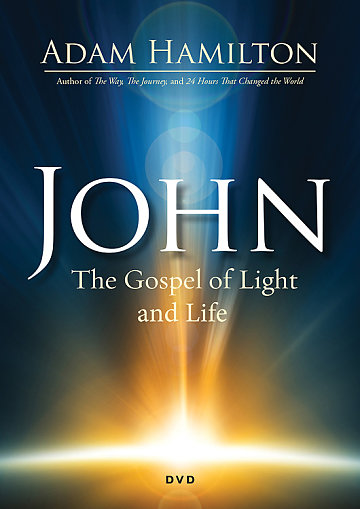
Thursday Noon Bible study begins again this Thursday, February 4. I hope you will consider joining us.  We will be studying the Gospel of John, a gospel of light and life and one of the most deeply spiritual books of the Bible.  As Lent approaches, we will engage in a season of spiritual growth and life-changing renewal.  The study includes DVD encounters with well-known writer, author, and pastor Adam Hamilton. Bring a sack lunch and an open spirit. http://www.fpcokc.org – Room 122. Taught by me…Pastor Matt.

This study will take us all the way through Lent, with the final class on Maundy Thursday, March 24.

Here is an intro video for those unfamiliar with Adam: https://youtu.be/6IqKkIW4Wc8

Laughter from God

little-boy-laughing

AM Psalm 61, 62; PM Psalm 68:1-20(21-23)24-36
Gen. 21:1-21; Heb. 11:13-22; John 6:41-51

Laughter from God

In our passage from Genesis today, Sarah says “God has brought laughter for me; everyone who hears will laugh with me.”

You may remember the story.  Abraham and Sarah are promised a son.  In their old age, after years of barrenness, that promise of a son becomes a reality.  It is so unbelievable, so unfathomable, both of them laugh.  The laughter started a year before his sons’ birth: “Abraham fell on his face and laughed” (17:17).  “Sarah laughed within herself” asserts the Sacred Text, and she later denies it before God, but God insists “you did laugh!” (18:9-15).

A lot of this is a play on words, for the Hebrew word for Isaac is Yitzchaq which means “he will laugh.”  All of this to say – nothing is impossible with God.  Don’t get stuck on Sarah’s laughter, which so often portrayed as an insult to God.  The laughter is a theme – it is a tool to remember and tell the story – a great rabbinical trick/play on words.  What is important is the outcome: the impossible becomes possible with our God.

We follow a God who brings about laughter.

With winter in full swing and many suffering from the winter doldrums, or Seasonal Affective Disorder (SAD), sometimes joy and laughter can be hard to come by.  The experts tell us laughter is good for us – reduces stress, boosts immunity, lowers blood pressure, releases endorphins.  Lately I have enjoyed the numerous comedians that can now be found on YouTube, the memes on Facebook, and all the hysterical social media that is available these days, especially the Onion.  If you are not familiar, check out the Onion, America’s Finest News Source.  Endless hysterics.  www.theonion.com

For me it is helpful to remember we follow a God who wants us to laugh – to experience the joys of life.  God wants us to work hard, play hard, and laugh hard.  Laugh at the impossibilities of the world.  Ultimately we are a people who laugh in the face of death, for death doesn’t get the last word.  We could extend this to world hunger or poverty.  Oh, God wants us to work to alleviate poverty, but one way to say that is that we are a people who is called to laugh in the face of poverty, homelessness, and all the other evils of life.  They do not bind us, or defeat us.

I hope right now you take a moment today when you see a funny meme and SHARE it.  Find your favorite comedian on YouTube or wherever and SHARE it!  Imagine if everyone who laughed turned around and made 10 people laugh.  Imagine the joy this day would hold!

The Power of the Table

Today’s Scripture Readings

The Power of the Table

“I am the bread of life.  Whoever comes to me will never be hungry, and whoever believes in me will never be thirsty.”  So it comes to us from Jesus in the gospel of John.

John has many “I AM” statements for Jesus: I am the resurrection and the life.  I am the living water.  I am the light of the world.  I am the Good Shepherd.  But being the bread of life is even more intimate and essential, for one does not live without bread.

Part of the symbol surrounding the bread, but also the mystery of the table, is this aspect of the bread: Christ becomes a part of us just as the b

read integrates with our body and soul.  The bread then becomes living bread, moving out into the world.

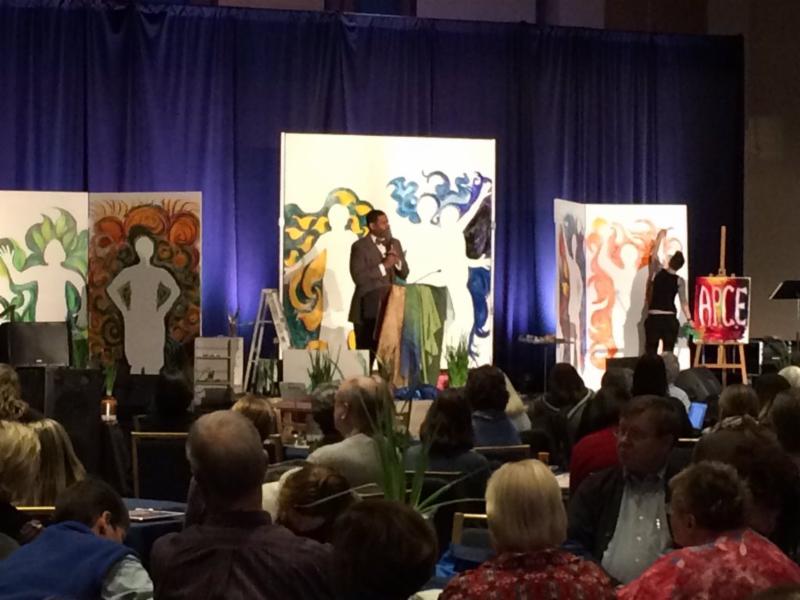
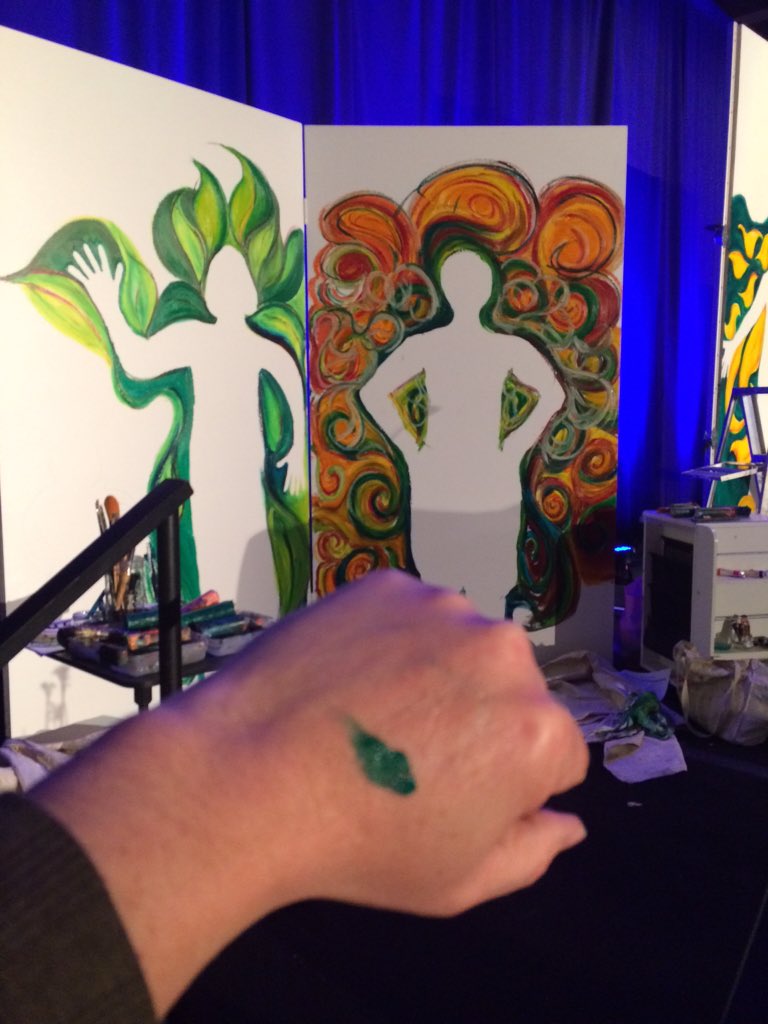
This was beautifully represented in art at the Christian Educator conference I got back from yesterday.  The Rev. Shawna Bowman was our artist, painting all throughout worship.   As you can see in the pictures, there is much paint, but a void of paint at the outline of people.  The last day this transformed, where after eating the bread of life and drinking from the cup of salvation, Shawna anointed our hands or faces with paint.  In a sense it was an unbinding of the body of Christ, as we were set free into the world.  Living art, taking the message with us.

If we take the gospel of John as a whole, we come to understand that the one who claims all these “I am” statements is also the one who claims that he is in the Father and the Father in him.  We also learn that he is in us, just as we are in him.

This mystical union is a fancy way of talking about the Holy Spirit and the body of Christ.  If Jesus is the bread of life, then we become the bread of life in the post-Pentecost days.  We become the hands of Christ.  We become the mechanism for daily sustenance to the hungering world around us.

-Matt