Unknown's avatar

About Matt Meinke

Presbyterian minister | Presbytery Leader @MaumeeVP | MSN Candidate & Aspiring RN | Adjunct professor | Leadership consultant | Organizational Development | OU, Thunder, Packer fan

Becoming Holy Week

fan-palm-283152_960_720

Jer. 12:1-16; Phil. 3:1-14; John 12:9-19

Holy Week marks an extraordinary sweep of Christian thought and theology.  It is a time of dwelling knee-deep in the powerful message that God has to us about sacrifice and our redemption.

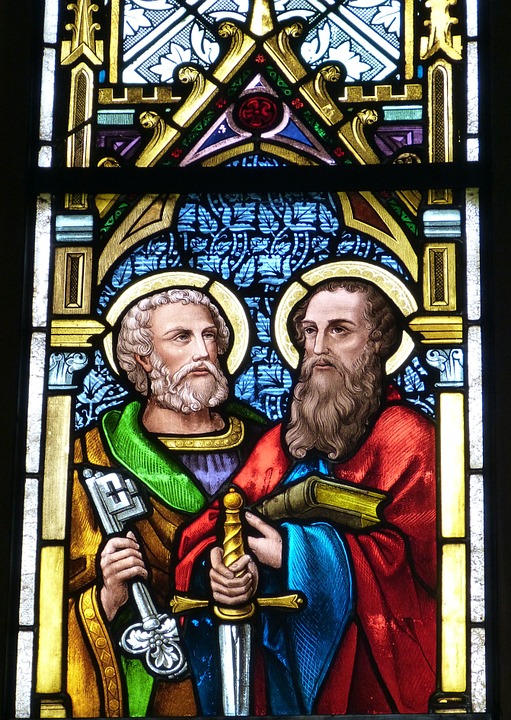
In Philippians 3, Paul also reminds us that Holy Week is about breaking with the past.  He holds up his Jewish-ness, and his “reason to be confident in the flesh.”  But then Paul does something extraordinary.  He refers to his confidence in the flesh (i.e. his circumcision, being a member of the tribe of Benjamin, being a Pharisee, etc.) as RUBBISH!  And in Greek, this is not as nice of a word as rubbish.

He is making it clear that none of that amounts to anything when it comes to “the surpassing value of knowing Christ Jesus my Lord….I want to know Christ and the power of his resurrection and the sharing of his sufferings by becoming like him in death.”  This is at the heart of Holy Week.

We become ones who share in Christ’s suffering.  We are buried with him in death.  And we rise to new life with him as well.

I remember being part of a Jewish Seder meal while studying in Israel.  I was surprised as this conservative Jewish family, as part of the liturgy, plugged up the bathtub drain and the kitchen sink and began the water flowing.  After some time had passed, I had a question: “Umm, shouldn’t we turn off the water now?  It is spilling on the kitchen floor!”  The head of the household was quick to respond, and to remind the little children in the room of what was going on, “No.  How else are we going to remember that we are part of the story and that WE escaped Egypt…escaped from the bondage?”

It was a powerful reminder to me that Holy Week is the same thing for me.  It is a time for me to walk Jesus’ footsteps and have this week become a part of my soul.  Because as Paul reminds us, we are “sharing of his sufferings by becoming like him in his death, if somehow I may attain the resurrection from the dead.”

May the power and drama of Holy Week captivate you.

-Matt

Change

caterpillar-1209834_960_720

Jer. 26:1-16; Rom. 11:1-12; John 10:19-42

Jeremiah speaks with such conviction!

We see the power of a prophet in Jeremiah’s passage for today.  Some pretty unpopular words come from his mouth in his Temple Sermon – with many of the priests, prophets, and people in attendance.

Upon hearing him speak of turning their ways, they turned on Jeremiah.  They “laid hold of him saying, ‘You shall die!’”  They decide that he deserves the sentence of death because he has prophesied against them.

Jeremiah appeals to their senses and declares that it is the Lord who sent him, and filled him with these words.  He declares, “Now therefore amend your ways and your doings, and obey the voice of the Lord your God, and the Lord will change his mind about the disaster that he has pronounced against you.  But as for me, here I am in your hands.  Do with me as seems good and right to do.”

Sometimes I marvel at Jeremiah’s spirit.  We too live in a time when God’s ways are pretty unpopular.  And I don’t see a whole lot of us sticking our necks out like Jeremiah did.  His life was on the line!

One of the ironies of this passage is that Jeremiah is talking about how if they change their ways God will change his mind, and in the midst of this they actually change THEIR minds.  He had decided to kill Jeremiah.  But they change their minds.

It is the small glimmer of hope that many people miss when they read this passage.  Already God is at work in their lives, molding them, nudging them, changing them.

How do we need to change our ways?  We abuse the earth and its resources.  We abuse one another in relationships, in our jobs, at the store.  Are we really using Lent to change our lives?  Or are we going about them exactly the same, feeling good about ourselves because we gave up chocolate for Lent?

Jeremiah speaks of something greater.  He speaks of a time when our ways are God’s ways.  I wonder if I wouldn’t be one of those temple priests asking for a harsh punishment for Jeremiah.  None of us like to look at our lives under a microscope.  None of us likes to be criticized.

But here it is.  God demands self-examination, repentance, and the seeking of a better relationship with God and others.

Let’s do that today.  Together.

-Matt


I Am the Gate

sunset-50494_960_720

Jer. 25:30-38; Rom. 10:14-21; John 10:1-18

In John’s Gospel today, Jesus is portrayed as the good shepherd.  “I am the gate for the sheep.”  This is the essence of a good shepherd.

There were no swinging doors and latches in Biblical times.  There are no fences either (or very few!).  Caves were primarily used as sheepsfolds.  I know this having been to Israel and stood in some of them.

And where was the gate?  The good shepherd was one who curled up at the entrance after all the sheep had gone in the fold, and who slept, not by the door, but slept AS the door.  The shepherd became the gate with her body.  What a wonderful image!

In the context of talking about thieves and bandits, Jesus says, “In order to get to my sheep, you have to go through me!”   How wonderful – how powerful – how amazing.

So often we want to see Jesus as gentle and mild.  But time and time again we see powerful images – military images of battles against evil, forceful stories about pigs drowning themselves or tables being overturned in the temple.  Here we have the might of a shepherd, beating away the foe.  Jesus is more than one who performs miracles, but one who fights for us, who overcomes the darkness, who confronts the evil one and wins.

And now we hear something striking: “The good shepherd lays down his life for the sheep.”  That would be good for a soldier to do, but not necessarily good for a shepherd to do.  What about the other sheep then!  Hard to turn a profit if you are dead.  Here we realize John has gone beyond talking about sheep and shepherds, but about the ultimate sacrifice of Jesus himself, the final conquering of the evil one – death itself.

– Matt

Can You See?

eye-788662_960_720

Jer. 25:8-17; Rom. 10:1-13; John 9:18-41

What do you think of when you hear the word SALVATION?  Some think about heaven.  Others about Jesus saving from sin.  I tend to think of it as simply SEEING GOD.  

In John’s gospel today there is a lengthy diatribe between the healed blind man and the Pharisees.  But ultimately this isn’t a story about Jesus healing – it is about SEEING GOD.  Some get it.  Others don’t.

In many ways this is the central focus of the entire gospel of John – SEEING GOD.

This blind man had been healed by Jesus on the Sabbath – he had taken mud and rubbed it on his eyes and healed him.  This man was brought to the Pharisees to answer some questions.  Their concern is an odd one: “How can a man who is a sinner perform such signs?”  There was a pervasive thought that being blind was a condition of one’s sin.  So their question is not only “How could Jesus do this?” but also “How could this blind man, a sinner, have deserved healing?”

Jesus turns this argument on its head.  He takes on the theology of the day, “I came into this world for judgment so that those who do not see may see, and those who do see may become blind.”  The Pharisees are upset and ask themselves “Surely we are not blind are we?”  Jesus said to them, “If you were blind, you would not have sin.  But now that you say, ‘we see,’ your sin remains.”

Jesus makes some enemies fast!!  He is taking on the establishment!  He is stirring the pot.

This passage is a good reminder that Jesus’ purpose is not all about peace, goodwill, and good deeds.  His mission is something more.  He is here to break open the establishment.  There is a time for meekness, and a time for bold action.  Jesus is more than a Good Shepherd, but also a rabble-rouser when he needs to be one.

I find great comfort in following this man from Nazareth for this very reason.  I see meek and mild, but I also see strength and fortitude.  He is going to speak the truth, even if that truth is going to break apart the Pharisees’ construct.

And that is the lesson for me, as we face Holy Week.  There is a time for the old constructs, the old ways of thinking and being to be put to rest.  There is a time for us to turn it all over and follow our leader to the cross.  It may not seem like the strength and fortitude we need, but it is.  God works in mysterious ways.  And our job is not to tamper with the Almighty, but to follow.

THANK YOU GOD, FOR HELPING US TO SEE YOU FULLY, THE WORD IN FLESH. AMEN.

-Matt

Unstoppable Strength

church-749695_960_720

Jer. 24:1-10; Rom. 9:19-33; John 9:1-17

Breaking News: Paul was a Presbyterian!  You heard it right here on Morning Reflections. Or so it seems from the way he talks today in Romans.  He carves out what I see as a doctrine of election, expanding on God’s freedom to Gentiles as well as Jews.  Including good predestination talk like “prepared beforehand”.

This was the first major fight of the Church.  No, it wasn’t over the ordination of women, or gay marriage.  It was: Were Gentiles going to be allowed to become Christians, or would they have to become Jews first, just as Jesus was a Jew?  Paul talks about God as a potter: “Has the potter no right over the clay, to make out of the same lump one object for special use and another for ordinary use?”

He is not arguing that the Jews are just ordinary lumps (HA!) and is questioning whether Gentiles have been made as special lumps too.  He backs up his arguments with good solid Old Testament prophecies and fulfillments.

One of the major shifts in New Testament thought is this doctrine of election.  It is being completely redrawn.  Does God have Chosen People?  Well yes, but the rules are completely different – not only in how they are selected, but who is in charge of that.

And this is why many of the Jewish Christians were objecting to this at the time, because it meant a loss of power and control.  Isn’t this always the way?  Self-interest trumps God’s grace.  “Oh, God can be gracious, but I wanna still be in charge” – Right?

Now God’s Spirit is on the loose.  And the good news is spreading in a chaotic fashion, and no one seems to be in charge.  As it turns out, that ends up being a good thing.

There is a wonderful book that I read many years ago.  It had such an impact on me, it is quoted a number of times near the beginning of my dissertation, as I lay out my argument for collaborative ministry.  The book is entitled The Starfish and the Spider: The Unstoppable Power of Leaderless Organizations.  Its main premise is that organizations that are decentralized often have unstoppable strength and power.  The internet is a good example of a decentralized organization.  There is no CEO of the internet.  And yet it has enormous power.  Self-organizing systems, which may seem like chaos, often have a complex web of organizational patterning that works.

The early church was a good example of an self-organizing system that was decentralized.  We follow Jesus Christ as our Lord and Savior.  He is the leader of the Church.  But good luck issuing a subpoena to him to testify to the Senate.  Furthermore, everyone has a different idea what the Lord is telling us to do.  The Church is about as decentralized as one can be.  And yet that is its strength, isn’t it?  Try snuffing out the Church.  Good luck.  Oh, you might have luck getting a couple churches to close, or even banning it in a country or two, but it will just crop up somewhere else with new leaders.

The decentralization was being built into the system.  And Paul was arguing that however chaotic it looked, that it is God’s prerogative to do just that.  If the potter wants to form this creature of the Church like this, then it is God’s right.

And how powerful we can be, armed with the good news of the grace at hand.

-Matt


Despair and Hopelessness

person-1821413_960_720

Jer. 22:13-23; Rom. 8:12-27; John 6:41-51

Psalm 69 is one of those psalms that is often overlooked.  It is long.  Perhaps a neglected psalm because it is so long.  I also dwells on desolation and some see it as a downer.

The psalmist feels like he is drowning.  Woven in also is having a central trust in God, which is front and center in this psalm.  “Save me, O God, for the waters have come up to my neck…I have come into deep waters, and the flood sweeps over me.

As if things couldn’t be worse, this drowning person also has a parched throat.  Salt water! Voice dried up – unable to cry for help.  As Psalm 69 plays out, it is easy to see the desolation and despair.  The longing for help is profound. The wonder and amazement of this psalm is that never once does the psalmist let go of the hope that God saves.  The abundant love of God is appealed to.

The world has come crashing in.  The world is consuming.  Insults and shame and dishonor from “my foes” also make themselves known.  The psalmist, through a confession of sin, and through the honest purging of his own venting, arrives at his vengeance and anger: “Pour out your indignation upon them, and let your burning anger overtake them.”

Despite the cries for help, and despite the need for help in the face of overwhelming oppression, the psalmist never forgets that God is there and has the power to make a change.

And this is the beauty of the psalms.  They teach us how to grieve and lament in a way that is not destructive to our relationship with God.  Trust.  Providential care.  Abundant love.  They all play a part, even in the midst of desolation.

I remember a few years ago running into someone at a neighborhood market who was profoundly sad.  My brief encounter with her in the aisle revealed a deep and profound longing.  I approach her and half-full shopping cart and two children, as she experienced an overwhelming bout of crying.  I quietly approached, caught her eye, asking “Ma’am.  What’s going on?”  As the drama of her life began to spill out, I realized I would need a quick get-away.  I listened for a brief while, and said a brief prayer on her request, and we went our separate ways.

I believe strongly in the dignity of each person and fight vehemently for it (those of you that know my political leanings), but I am sure you relate to my struggle: How much can I really do to help in the middle of Wal-Mart?  That sense of fight or flight kicked in as a thought selfishly of my long day ahead.

We ran into each other again at the checkout counter.  Sadness and despair had taken hold.  Everything was wrong with her life and it was everyone’s fault.  It was the ex-husband.  It was the kids.  It was the checker.  It was the car mechanic.  Nothing was right.

I offered her refuge at First Pres and that I would love to talk with her more sometime.  “Nothing can fix all this now.  Not even God can save me now.”  She disappeared before I could respond.

I remained at the checkout, bewildered and befuddled by the hopelessness and the powerlessness I felt.  I did not see her again.

All of us have experienced sadness and despair.  The world is full of it.

Where is God for us at our most vulnerable?  How are we going to respond with disappointment, difficulty, and sometimes desolation.  At rock bottom, do we find a savior, or an empty pit?

If I know anything about God, it is that God never leaves us.  I pray that as you cry out to God (those of you that are crying out) that you will find hope in scripture and as you tell your story to each other.  My door is always open.

Let’s discover God together.

-Matt

Washed of Sin? Say What?

laundry-413688_960_720

Jer. 17:19-27; Rom. 7:13-25; John 6:16-27

What does it mean to be washed of our sin?  To be “made new”?  We USAmerican Christians don’t talk about sin much these days.  It makes us uncomfortable.  And in our world of “alternative facts” and ideology over facts, we flip the channel or shut off.

Paul tackles an even deeper layer of this – a great concern of early Christians.  If in our baptism we were made new, why are we still hanging out with other Christians on earth and not in heaven?  How does sin fit in if we were washed of our sin?  Isn’t that life over?

Paul’s answer in Romans is very much “Yes and No.”  He speaks of the conflict with the spirit and the flesh – that the spirit is willing but the flesh is weak.  “I do not understand my own actions.  For I do not do what I want, but I do the very thing I hate.”

He uses powerful words to describe this life.  Many of these words have been demonized by our culture and so we try to avoid them, to our detriment, because this is how he drills home the importance.  Words and phrases like: slave, war, making me captive, evil lies close at hand.

For Paul the war against the flesh was a cosmic battle.  His intention is not to teach us to hate our bodies, for in other places we learn that our bodies are temples of the Lord, to be cared for and protected.  But at least here, speaking of sin, he is helping to explain the struggle of the mind and the flesh – summing up the human condition.

To be at war with his own true intentions, or to be captive or enslaved by evil, is a good way to describe the “already and not yet” aspects of the kingdom of God. But furthermore, and more importantly, this inner struggle involves the law.  Paul discovers that one cannot master the evil impulses with the law, or with human will.  So he turns to a greater Master.  That master is also the King, the Messiah.  He is the one who has conquered the Evil One on the battlefield at the cross.

This is where Paul’s argument gains much momentum.  It is not that our physical and spiritual selves are at war with one another, making us schizophrenic-like.  Instead the battle is for grace and hope and life.  It is beyond our individual SINS, and attests to the power and domain of one who went before us to conquer the sting of SIN.

I encounter a lot of people as a minister who are struggling with various inner conflicts.  Some are trapped in abusive relationships, or unfulfilling careers.  Others are struggling with guilt they have imposed on themselves that haunts them from childhood.  Others are struggling with addiction or sexual identity.

To all these people Paul is saying that there is hope.  And his hope is not that the flesh can be overcome with the spirit, but that the flesh can be overcome by the Spirit.  Notice the capitalization.  Paul turns and appeals to God as the one who overcomes the law with grace, and helps in the struggle of the human condition.  The promise is the Spirit of life, in whom judgment does not reign supreme, but love, grace, and acceptance.

-Matt