Unknown's avatar

About Matt Meinke

Presbyterian minister | Presbytery Leader @MaumeeVP | MSN Candidate & Aspiring RN | Adjunct professor | Leadership consultant | Organizational Development | OU, Thunder, Packer fan

The Awesomeness of God

mountain-1462655_960_720

Micah 1:1-9; Acts 23:12-24; Luke 7:1-17

Presbyterians are funny creatures.  We are the type who actually sit around and talk about things like God’s sovereignty.  So it was with the last new member’s class we had.  Can you believe nerds like that still exist?  It’s true.  Buy me the tshirt.

It is a key Presbyterian belief: God’s sovereignty.  This world struggles with that concept.  In this do-it-yourself age, are we really willing to believe God holds all the power and authority?  Do we really believe God is all powerful?

Today in Micah we see a picture painted of God’s authority.  He begins with an oracle of divine judgment.  It is not all fun in the sun here.  It becomes clear that God is mad at the people and there is hell to pay.

Micah forms his words into a covenant lawsuit, with God as the plaintiff and the people as defendants.  This is a common literary structure for the prophets, but it sounds a bit strange to our ears sometimes: “Hear, you peoples, all of you; listen, O earth, and all that is in it; let the Lord God be a witness against you.”

When I step back and simply accept the literary form and just focus on the images and the beautiful Hebraic poetry, I marvel at God’s power and authority.  “Then the mountains will melt under him and the valleys will burst open.”  And, “I will pour down her stones into the valley, and uncover her foundations.”  Now that is a God who is in charge, and who stands above and beyond creation!

This is a God who is over all and through all.  This is a God who drives the prophet to his knees, barefoot and naked, wailing that the people’s “wound is incurable.  It has come to Judah; it has reached to the gate of my people, to Jerusalem.”

What words!  What persuasive speech!  And what a glorious representation of the people’s sin and a right-brained plea for the people to repent.  He paints such a picture that my imagination says, “YES!  I want to follow and be made right with God too!”

The antithesis to this story is provided in Luke.  There we meet the centurion who demonstrates such faith that Jesus heals someone he has not met – the centurion’s servant.  “Lord…, I am not worthy to have you come under my roof;…but only speak the word, and let my servant be healed.”  When Jesus heard this, he was amazed and said, “Not even in Israel have I found such faith.”

Jesus, like Micah, incites the crowd, but does so with acts of mercy, deeds, and miracles.  Eventually we will find him on a cross, the ultimate act of mercy.  Ironically in the cross, we find God’s power and authority as well.

May today be a day of you tapping into God’s power, wherever it may be seen.

-Matt

Confidence in the Face of Strife

balanced-rock-1279981_960_720

Hosea 14:1-9; Acts 22:30-23:11; Luke 6:39-49

Watching this year’s political cycle is one of the most terrifying and disturbing in our nation’s history.  Never before have I felt the choice is so clear – like the future of our democracy is in the balance.  Gun violence and racism also reign supreme in our country, with the fabric of decency, moderation, and self-control elusive at best.  Amidst the anxieties and fear of the future many of us hold, I also see the daily stresses of many of us almost too much to bear – with decisions coming about loved one’s health, the best way to care for sick relatives, sometimes not knowing what to do or how to feel.  Anxiety and fear of the future loom.

Amidst the immense pressures and struggles we are facing, I turn to our reading from Acts today.  Against all odds, Paul stands before the Council and speaks harsh words.  The world is bearing down on him, and against all odds he stands firm in his faith.  They strike him on the mouth.  They accuse him.  There is dissent.  The dissent too becomes violent.

“That night the Lord stood near him and said, ‘Keep up your courage!  For just as you have testified for me in Jerusalem, so you must bear witness also in Rome.”  This hardly seems like words of comfort!  He has endured all this, only to be sent to Rome to endure more!  It is there he faces his own death.

I could understand if Paul’s confidence melted away!  This hardly seems like a fair life.  And yet, we have to realize that God is not interested in what is fair – but instead is concerned with the truth, and righteousness.

In the midst of Paul’s anguish – in the midst of his struggle – there is something that kept him going and that was the hope of the gospel which is in Christ Jesus.  Paul seemed to grasp completely that his joy was beyond this life.  He did not need money to be happy.  His happiness was something deeper – it was joy, sown into the heart.  His joy transcended the difficulties of this life, because he saw the prize that was beyond.

It is this joy which I pray I can have this day.  I pray that I can remain above the anxiety – to speak words of calm and peace to a hurting world.  I pray that I can add just a small glimmer of “the beyond” to a world that has recently been thrust whole-heartedly on the present.  I hope and pray that my comfort can rest beyond my life – instead rest with the One who was and who is and who is to come.

I also pray for this country.  That peace may reign, violence may end, and decisions about the welfare of our nation be entrusted to those who have the stable hand of leadership and can guide us into God’s bright new future.

-Matt

Son of God? or Crackpot?

challah-1235620_960_720

Hosea 5:8-6:6; Acts 21:27-36; Luke 6:1-11

Today’s story in Luke is another radical example of Jesus as lawbreaker, but more so, also being over and above the law.

Jesus breaks one of the Ten Commandments today, as the Jews of the time see it.  He does so by raising serious questions as to what it means to “keep the Sabbath.”  What do Scriptures demand of us?  What is the Holy Spirit, through the life of Christ, leading us to in terms of Sabbath-keeping?

In the first vignette, the disciples pluck grain and eat on the Sabbath.  When questioned, Jesus declares, “The Son of Man is lord of the Sabbath.”  This is an extraordinary claim.  The Son of Man?  As in, the Messiah?  “Aren’t you full of yourself, mister,” the Pharisees must have been thinking.

Have you read any C.S. Lewis books?  I love Lewis’ book Mere Christianity, a simple overview of Christianity.  There is also a common thread that runs throughout.  Lewis describes the Christian walk as the “shocking alternative.”  He declares that there is no middle ground for the Christian.  Jesus comes to earth and does more than perform miracles.  He is more than a nice guy.  He is someone who declares himself as God’s son, as the Messiah, and as the Light of the World.  That being the case, there is no middle ground. Either he is the Messiah, as he claims, or he is a nut-case.  This is the dilemma.  You can’t just think he was a nice prophet who was misunderstood.  You either believe he is the Son of Man, or a crackpot.

This impact can be seen in our passage today.

The second vignette we have today is a more radical breaking of the Sabbath.  Jesus heals a man with a withered hand.  He then asks the crowd, knowing what they were thinking, “I ask you, is it lawful to do good or to do harm on the Sabbath, to save life or to destroy it?”

We believe Jesus to be the Messiah.  He is God.  So he has every right to break the rules that he himself made.  In other places he re-frames some rules – declaring that the Sabbath is made for people, not people for the Sabbath.

At the end of the day, we encounter a savior who is more than just a lawbreaker – he is a healer, a caregiver, and a person who stands over the Sabbath as one who is here to teach us what love and caring really look like.

He showered this world with love – and not just in healing withered hands, but in dying on a cross so that we all may taste life, taste freedom, and taste love in a fresh new way.  It is ironic, but it is true.

This is our quest – to come to know this God/man who demands of us so much, and who has given so much as well.

-Matt

Radical Acceptance

acceptance-968458_960_720

Hosea 4:11-19; Acts 21:15-26; Luke 5:27-39

Jesus continues to challenge the establishment today.  He is such a rabble-rouser! Have you thought about that!?

In today’s passage, we encounter Levi, who we assume later becomes Matthew.  Levi is a tax collector, and sitting at his tax booth, Jesus says to him, “Follow me.”  He leaves everything and follows Jesus.

Before he leaves, he decided to throw a huge party for Jesus in his house, and so all his friends – fellow tax collectors also come to the party.  Naturally when the Pharisees and scribes get wind of this they complain to the disciples about it, “Why do you eat and drink with tax collectors and sinners?”  (You see, just EATING and drinking with tax collectors was considered a sin, an offensive act for Jews, where food laws clearly separate the properly observant Jews from sinners.)

Jesus responds with, “Those who are well have no need of a physician, but those who are sick.”

Jesus is challenging us still.  In our current society, there are many who would quickly say, “Oh, he hangs around the wrong crowd,” if they saw a fellow Christian hanging out with a non-Christian.  And I know some well-meaning church folks who would panic if they were told them their job as a Christian was to hang out at the homeless shelters, the bars and clubs, and the prisons.

Because, you see, a tax collector in that time was not like an IRS agent today.  It was someone actually detested – a henchman of Rome.  It was like a dirty word.  Today, it would be like Jesus partying with ISIS members here in America – someone who represents an antithesis to everything we stand for.

And Jesus reaches out to him.  And the relationship transforms.


It becomes clear that if one is going to follow Jesus, one better be ready to have some new rules.  And these are new, wacky rules based on principles of love and acceptance, not the Levitical codes about cleanliness.

I wonder where that leaves us today?  Are we living up to these challenges?

Because this is RADICAL LOVE and ACCEPTANCE.

-Matt

Your Sins Are Forgiven

church-753815_960_720

Hosea 4:1-10; Acts 21:1-14; Luke 5:12-26

Today Luke reminds us of the familiar story of the healing of the paralytic.  His friends bring him to the house, but finding no way in because of the crowd, they lower him in through the roof.  When Jesus sees their faith, he declares, “Friend, your sins are forgiven.”

I have stood at the ancient archaeological site of Peter’s mother-in-law’s house where this is thought to have happened.  The roof is no longer there, but the mystic around this story still is.  Our folks going to Israel will soon be standing at this site of this miracle as well.

Of course the real fascination is the scandal of Jesus forgiving sins.  The scribes know full well that only God forgives sins, so to them this sounds like blasphemy.  Jesus identifies himself as the Son of Man, which is quite a title – an Old Testament term which means that at the very least he is a great prophet, but more likely the end-time judge who arrives on the clouds of heaven.  “Who does this guy think he is?” the scribes are asking themselves.

And then Jesus does something miraculous.  He steps in and says, “Which is easier…to say ‘your sins are forgiven,’ or to say ‘Stand up and walk.’”  So he does it.  And the man takes up his mat and goes home.  This is all too much for the crowd.  Strange things.

What fascinates me the most from this passage is not the healing, but Jesus’ initial assertion that “Your sins are forgiven.”   What sins?  The sin of busting this guy’s roof?  Jesus may have been referring to the understanding of sin of the time, which held that his physical affliction had something to do with his sins of the past.

At other times in the gospels, Jesus challenges even this idea.  He talks about sin in a much more general way, often leaving the crowd wondering if these were the “sins of the mother and father.”  At other times, Jesus understands sin as more as a condition, one that we all suffer from.

But here he does not even ask this paralyzed man what he did.  Sin is just something that exists in all.  The overwhelming part of this story is that he focuses not on the past, but the present.  No matter what he did or who he is, the fact is, “Your sins are forgiven.”

This is a powerful statement – come to Jesus and your sins are forgiven.  And that goes for all of us.

This story isn’t about a paralytic that goes through someone’s roof – it is about every person, and the power of action and belief.

-Matt

Playing God

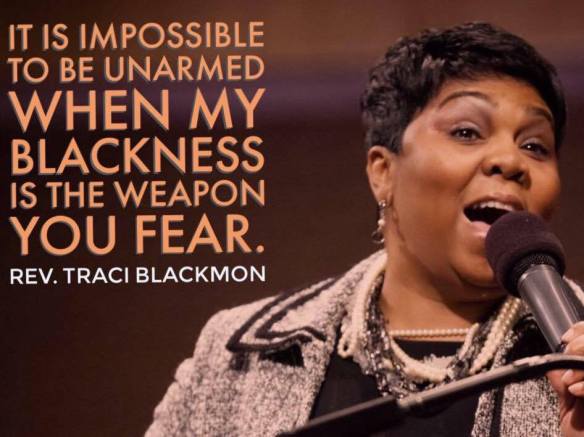
14332955_10209977610538231_4639195882358263768_n

Esther 6:1-14 or Judith 10:1-23; Acts 19:1-10; Luke 4:1-13

When will the slaughter of the unarmed in this country cease?.  If I see one more video of police killing someone at a traffic stop….

Today’s passage in Luke is the temptation of Jesus.  It ends with Jesus being placed on the pinnacle of the temple with the dare: “If you are the Son of God, throw yourself down from here….”  Jesus, of course, answers with, “It is said, ‘Do not put the Lord your God to the test.’”

He is tempted to play God.

The argument could be made that when someone has a gun in their hand they are tempted to play God.  I could also make the argument that these events, these killings, are the result of fear.  Adrenaline is coursing and people panic.  The argument could also be made that is it just primarily FEAR, and that it is related to race, because statistics are not too kind to those trying to make another argument.

I was going to begin my reflection with “When will the slaughter of the unarmed citizens of this country cease?” But then I realized what I would have truly meant was “When will the slaughter of the unarmed black citizens cease?”  The reality is we have a race problem.

The problem is that we are overly-weaponized and death-options are all too close.  The temptation is to give in to fear, and with real bullets it is all too easy.

Why are we not talking about having stun guns as the primary weapon to draw for law enforcement?

I come from an extended family plentiful with law enforcement, so I know the dangers our brave men and women in uniform face every day.  I am all for them having the option of deadly force and being able to protect themselves.  Because those streets can be brutal. But these days it would appear that that sidearm is drawn ALL TOO QUICKLY for way too many of our law enforcement officers.

This just feeds our culture of violence.  It feeds the fear.  It is a vicious cycle that leads to these traffic stops escalating.

I am so tired of reading of violence.  And I wonder when we are going to grab scripture with both hands and actually start reading some of the profound and upsetting words Jesus has for us.  When are we going to stare into the face of Jesus and face our own temptations to play God, and make hyper decisions rooted in our own fears.

When are we going to truly follow the Prince of Peace who demands we turn the other cheek and embrace our enemies?  Violence does not fight violence.

We must reverse this world’s tendency to treat daily life like one giant video game that has no consequences.  Because that is the true temptation – to wash our hands of all responsibility and punt.

Today is the day each of us must wrestle with our own temptations – as individuals, as citizens, and as a nation.

-Matt

Baptisms All Around

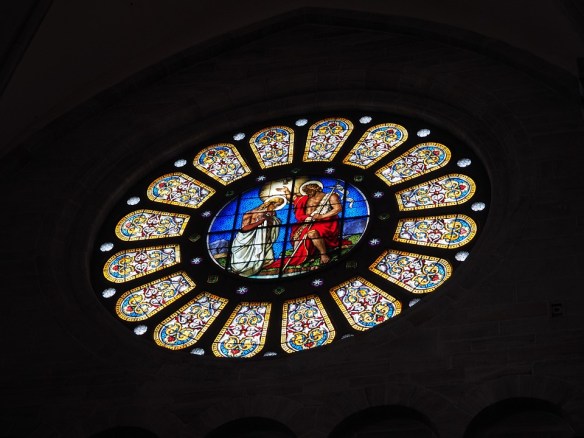
rose-window-699873_960_720

Esther 5:1-14 or Judith 8:9-17, 9:1, 9:7-10; Acts 18:12-28; Luke 3:15-22

Just last night at Session we approved two more baptisms.  We seem to be doing a lot of baptisms lately.  How wonderful!  Always good to have. Our passages seem to be full of them too.

Baptism is a fascinating sacrament.  In it we enter into a new life – into a new community.  In it, we also see our own death – a death to an old way of being.  This connection between death and new life, water and fire is made in our Acts and Luke readings.

In Acts, we hear of Paul in Corinth – a man who is continually in trouble with the law.  He is brought before Gallio, the proconsul of Achaia, who very much like Pilate for Jesus, renounces his own jurisdiction.  The Jews claim Paul is “persuading people to worship God in ways that are contrary to the law.”  Gallio basically says so what, declaring he doesn’t want to be a judge of Jewish matters.  Paul does not repent of his new vows in Christ

Paul wanders all around, strengthening the disciples in their new found Messiah.  In the course of these travels, we come across a Jew named Apollos.  He is eloquent, well-versed in the scriptures, burning with enthusiasm.  He knew his Old Testament and the prophesies regarding the Messiah.  But he did not know of Jesus’ arrival.

Pricilla and Aquila pull him aside and “explained the Way of God more accurately.”  He then becomes a great champion of the faith.

It is a great story.

In Luke, we hear the tale of the baptism of Jesus, as well as John’s proclamations about baptism.  “I baptize you with water; but one who is more powerful than I is coming…. He will baptize you with the Holy Spirit and fire.”

Remember that Luke wrote both Luke and the book of Acts.  He very well may have in mind a connection here.  We hear of water and fire and John seems to know intrinsically that someone like Jesus is coming.  Apollos has the same ideas.  He knows a Messiah is coming.  He had been preaching that – with fire, although he knows not the name of Jesus.

Acts is a fantastical story.  It has mystery and intrigue.  It provides for this almost mysterious transformation and spreading of the gospel.  Like a good virus, there seems to be no way to stop this either.  Even Apollos knows what is coming, and he is from Alexandria.  It appears the good news will spread to all the ends of the earth.

What is interesting about Acts is that by the books end, it does not spread to the ends of the earth.  But yet, here we are reading this story in yet another corner of the globe.  By stories end, we ourselves are thrust into the story, left wondering, “So now it is your turn.  What’s next?”
Very much like a Choose Your Own Adventure novel, we become a part of the story.  And we continue to see the firey story spread every time we baptize in his name.

How does your baptism by fire and water affect the trajectory of our story?  What is your baptism driving you to do what you do?

-Matt